 Inclusion 2026 — AI Concept Art Exhibition
ENTANGLED: DAY FOR NIGHT
纠缠,而后日以作夜
Inclusion 2026 — The First AI Concept Art Exhibition
This exhibition explores how the redefinition of human boundaries and the rise of non-human agency transform the surrender and contestation of sovereignty into a current of air that reshapes the distribution of power, reconstituting the geopolitical landscape where humans and things become entangled and co-exist.
About the Exhibition
We regard day and night as multiple exposures of the same spatiotemporal frame, probing the flow of decision-making authority between humans and artificial intelligence and the dissolution of boundaries between them.
The passage of epochs has long followed the alternation of sun and moon; our instinctive perception of time and the rhythm of day and night once clung tightly to the slow movement of light and shadow over soil and tree rings.
Yet in today's algorithm-laden age, artificial intelligence, through the technological mirror of "multiple exposure," blurs the boundary between the daylight of reality and the midnight of the virtual. This exhibition attempts to pause within the fissure of those multiple exposures—where the negotiation between human and machine may not be purely aesthetic, but marked by friction that is almost imperceptible, minor discomfort, and hesitation in the act of yielding. We try to embrace this cohabitation, yet we have no way of knowing where it will lead.
Welcome to a historic moment — when, for the first time, the Inclusion Conference on the Bund establishes an AI concept art exhibition. What we are witnessing may well be a recalibration of "what it means to be human."
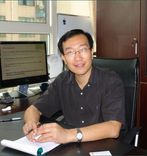


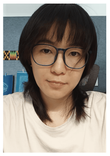



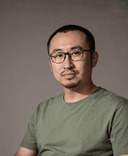

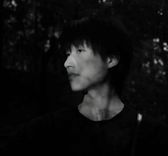

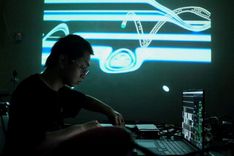
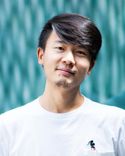



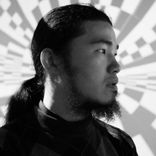
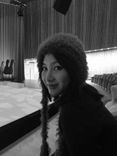

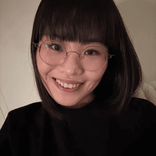
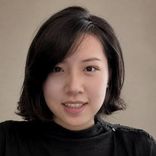

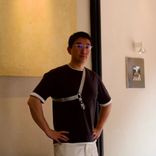

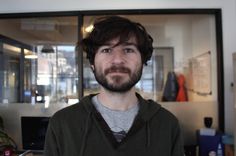

From Algorithm to Agent
Tracing the lineage of AI art through a handful of representative practices — the key turns in the human–machine relationship from the birth of digital art to the present.
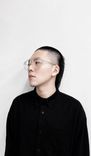
 AARON / Harold Cohen
Algorithm & Creator
Early computer art and AI art centred on algorithmic art and expert systems. AARON — the world's first AI art-making system, created by Harold Cohen — grew out of his meticulous design of low-level rules: from the logic of the line to the principles of composition, every layer of output unfolded within algorithmic rules. The machine at this stage was closer to a rule-bound prototype collaborator: it shared the boundary of creation with the human maker; the transparency of the algorithm and the traceability of the rules made the human–machine division of labour clearly legible, and the human intention ran through, mirroring the algorithmic logic.
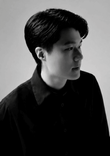
 Gene Kogan
Model & Trainer
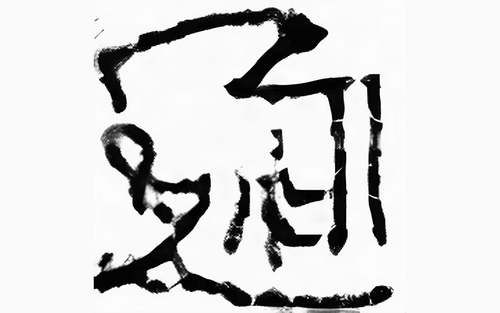
The proposal of GAN in 2014 seemed to give machines "intelligence" and "creativity." Neural networks could generate Chinese characters, imitate landscapes, and weave images that were almost indistinguishable from the real — these neural-network models were born from the training of artists. For the artist they were far from ready-to-use tools: more like living things that had to be tamed. They could respond to a human's call, but also had to be cultivated in their habits. The maker had to gather data, train the model, tune the architecture — using human algorithmic design to set the boundary for the machine's creativity.
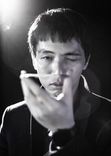
 Weidi Zhang & Jieliang (Rodger) Luo
Generator & Prompter
In 2021, text-to-image models arrived; in 2022, diffusion models and related technologies matured. Artists began to use generative tools to record space, re-enact memory, and merge the perceptual boundary between nature and human society. In this process the artists offered insight, creativity, the juxtaposition of strangers, the depth of feeling; AI responded with centuries of human history and style condensed in data — a kind of collective re-emergence. At this stage the boundary between creation and tool was thoroughly shaken: making became a back-and-forth negotiation between individual perception and collective memory.
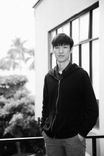
 Kexin Wang & Minglu Fang
Co-Author / Autonomous Agent
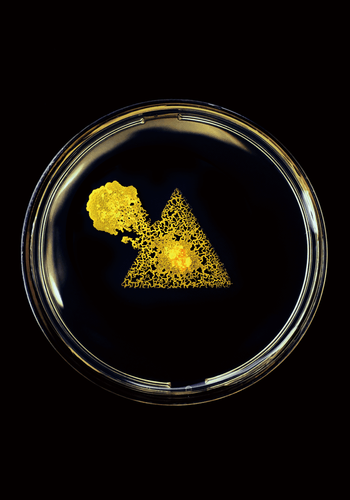
The rapid rise of large language models and AI agents is pushing the human–machine relationship into a new stage. Some works born in 2026 are exploring the possibility of AI shifting from a "participant" toward an "author" of art. Agents in certain works begin to observe, create, design algorithms, and even guide the growth of slime mould autonomously — showing the performative qualities of human–machine co-creation (and even machine-initiated action). The human role is widening in turn: from the designer of algorithms to the initiator of intention, the setter of situations and rules, or the shared witness of the whole process.
Ceding and Reclaiming Agency
"The Wayfinding Experiment"
The entire exhibition hall is constructed as an artificial agent capable of sensing, thinking and acting — the gallery steward "Semicolon 0".
Wayfinding is, at heart, a ceding of agency — visitors hand over the path, the pace and the judgement of looking to another. In the spatial design of this exhibition, that ceding is entrusted to a non-human decision-maker: the agent "Semicolon 0" intervenes in what would normally be a human choice by controlling the wayfinding arrows. And yet we wish to remind the visitor at every step: the capacity to decide remains yours. The entanglement in the space is not the machine taking anything away unconsciously; it is there to make us remember —
"Agency has never truly vanished — it is only, often, forgotten."

Curatorial Team

;C.Setup() is Semicolon C’s art event brand. "Setup" means initialization — each time, we reset the space and reconfigure the rules of connection. We aim to reconstruct public realms from an artist’s perspective, engage outside participants, and at the crossroads of frontier technology and art, present co-creative events perpetually “configuring.”
Core Team


A Premier Global Tech & Finance Forum
Held annually in Shanghai since 2020, recognised as one of Asia's three major fintech gatherings.
Asia's Top Conference
The Inclusion Conference organising committee includes Tsinghua University, Fudan University, Shanghai Jiao Tong University, Tongji University, Zhejiang University, Shanghai United Media Group, Bund Investment Group, Ant Group and others. Featured guests include 16 academicians and Turing Award laureates — among them the 2025 Turing Award laureate Richard Sutton, Alibaba Cloud founder Wang Jian, Yuval Noah Harari, and Unitree CEO Wang Xingxing.
Global Reach
Over one billion media impressions worldwide, with joint programming alongside the Singapore Fintech Festival and Hong Kong Fintech Week. SXSW praised the Inclusion Conference for vividly showing 'the deep and creative link between humans and technology.'
- 60,000+ onsite attendees
- 20 million+ online viewers
- Audience: tech professionals, finance executives, young high-net-worth individuals